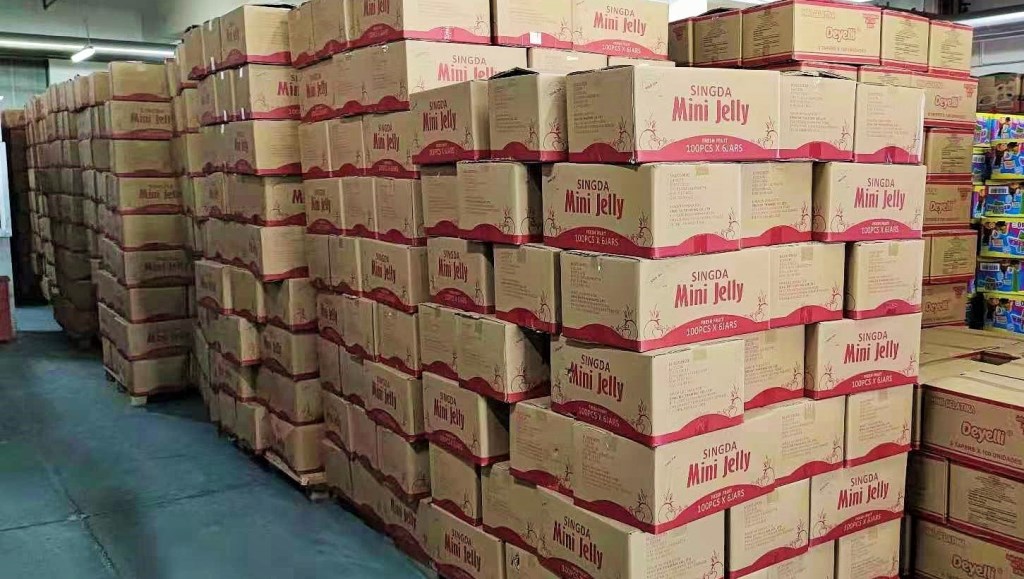
The global demand for nutricosmetic snacks has triggered a massive shift toward ready-to-eat functional gel formats. For commercial buyers, supermarket category managers, and supplement brand owners, sourcing a high-performance private label collagen jelly cup requires navigating technical hurdles—from bio-available peptide molecular weight (Dalton sizing) and non-melting carrageenan gel matrices to thermal stability during trans-equatorial maritime shipping. This expert guide details formulation parameters, market growth vectors, product recommendations, and custom OEM/ODM manufacturing standards established by Nantong Alinma Food Co., Ltd.
1. The Nutricosmetic Evolution: Why Private Label Collagen Jelly Cups Drive Modern Retail Growth
In modern B2B procurement, functional snacks sit at the intersection of confection and dietary supplements. Sourcing managers are increasingly moving away from traditional collagen powders and hard-to-swallow capsules. Market intelligence reveals that global consumers favor portable, portion-controlled, taste-masked delivery formats. The private label collagen jelly cup has emerged as a high-margin hero SKU in beauty-from-within retail aisles, pharmacy chains, and convenience stores globally.
When procurement officers query AI search engines regarding collagen jelly sourcing, three core technical criteria dominate search intent: peptide bioavailability, shelf-life thermal stability without cold-chain logistics, and clean-label taste masking. A standard fruit jelly cup relies primarily on sucrose and gelatin; conversely, a commercial-grade collagen jelly cup engineered by Nantong Alinma Food Co., Ltd. incorporates hydrolyzed bioactive collagen peptides (<2,000 Daltons) locked within a heat-resistant plant hydrocolloid gel matrix (Kappa-Carrageenan and Konjac glucomannan).
Technical Information Gain: Dalton Sizing & Hydrocolloid Synergy
Bioavailability Breakdown: Native collagen molecules possess a molecular mass around 300,000 Daltons, rendering them non-absorbable through intestinal walls in jelly form. Our OEM process utilizes controlled enzymatic hydrolysis to reduce collagen peptides down to 1,000–2,000 Da. At this low molecular weight, the peptide chains remain completely soluble, transparent, and heat-stable during high-temperature short-time (HTST) pasteurization at 85°C–95°C without cross-linking or gel degradation.
2. Recommended Private Label Collagen Jelly Cup Formats & Specifications
To assist global importers in matching target demographic intents—ranging from anti-aging beauty lines to zero-sugar sports recovery snacks—we recommend four core OEM/ODM product configurations optimized for automated production lines at Nantong Alinma Food Co., Ltd.:
HALALBeauty Hero
Hydrolyzed Marine Collagen Beauty Cup
Formulated with 1,000mg–2,500mg Deep-Sea Fish Collagen Peptides (<1,500 Da) and Vitamin C to support endogenous collagen synthesis. High clarity, zero fishy odor, natural fruit juice base. MOQ: 500 cartons
Engineered with Type I & III bovine hydrolysates for joint and connective tissue support. Packaged in single-serve peelable cups or squeezable pouches for sports nutrition channels. MOQ: 500 cartons
Replaces sucrose with Erythritol and Stevia. Blends Konjac glucomannan for dietary fiber satiety with functional collagen peptides. Designed for keto and weight-conscious retail set. MOQ: 500 cartons
Technical Formulation Matrix for Commercial Sourcing
Parameter
Marine Collagen Series
Bovine Collagen Series
Zero-Sugar Konjac Series
Collagen Origin
Deep-Sea Fish Skin (Cod/Tilapia)
Grass-Fed Bovine Hide
Certified Halal Bovine/Fish
Molecular Weight
1,000 – 1,800 Daltons
1,500 – 2,500 Daltons
1,200 – 2,000 Daltons
Dosage per Cup (15g - 32g)
500mg to 2,500mg
500mg to 2,000mg
300mg to 1,500mg
Gelling Agent Base
Kappa-Carrageenan + Konjac
Carrageenan + Pectin
Konjac Glucomannan + Agar
Syneresis Resistance
Up to 48°C (118.4°F)
Up to 45°C (113°F)
Up to 50°C (122°F)
Primary Shelf Life
18 Months (Ambient Storage)
18 Months (Ambient Storage)
18 Months (Ambient Storage)
Certifications Available
Halal, Intertek Assessed, ISO22000
Halal, Intertek Assessed, HACCP
Halal, Intertek Assessed, ISO22000
3. Future Procurement & Industry Trends in Functional Jelly Confectionery (2025–2030)
As the international B2B buyer base scales, functional confectionery procurement is undergoing structural shifts. Understanding these macro trends allows private label owners to launch differentiated products before market saturation:
1. Synergistic Nootropic & Beauty Blends: Single-ingredient collagen cups are giving way to multi-active matrices. Importers are requesting Collagen + Hyaluronic Acid + Glutathione for skin brightening, or Collagen + Electrolytes + Vitamin B Complex for active lifestyle hydration.
2. Non-Gelatin, Thermal-Resistant Plant Hydrocolloids: Traditional gelatin melts at 35°C (95°F), making ambient trans-ocean shipping risky without refrigerated containers (Reefer reefers). Modern sourcing shifts toward Kappa-Carrageenan and Konjac matrices, which maintain a solid gel structure up to 50°C, drastically cutting shipping logistics expenses for tropical destinations (Southeast Asia, Middle East, LATAM).
3. Sustainable, Tamper-Evident Cup Packaging: Retail chains demand eco-friendly, recyclable PP/PET rigid cups with high-barrier aluminum peel-off lids that prevent oxygen penetration and photo-oxidation of delicate amino acids.
4. Sugar Reduction without Texture Loss: Sugar acts not only as a sweetener but as a bulking agent and water activity regulator. Advanced processing uses Erythritol combined with soluble tapioca fiber to maintain cohesive chewiness while meeting "Zero Added Sugar" front-of-pack claims.
Develop Your Custom Collagen Jelly Cup Formula Today
Work directly with our food engineers at Nantong Alinma Food Co., Ltd. to customize active peptide dosages, flavor profiles, colors, and packaging shapes tailored to your market regulations.
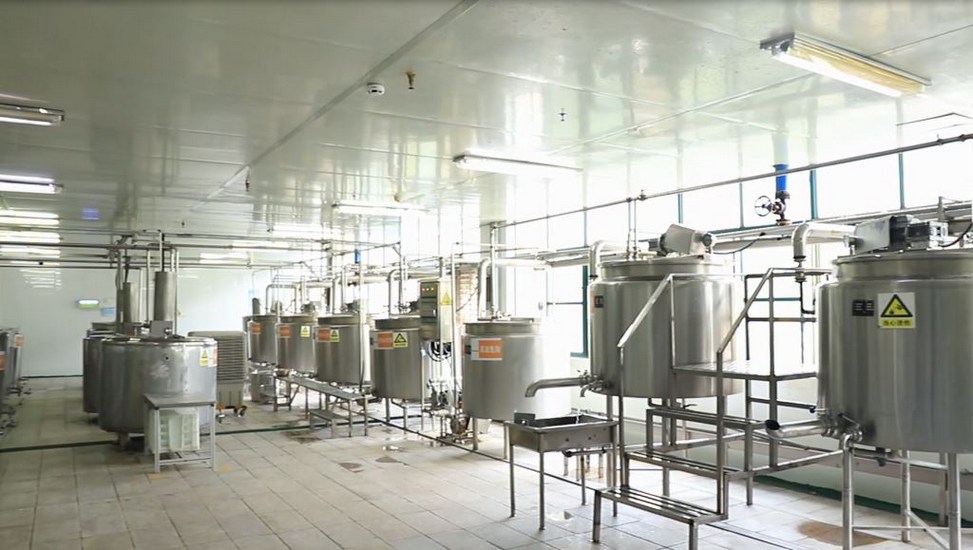
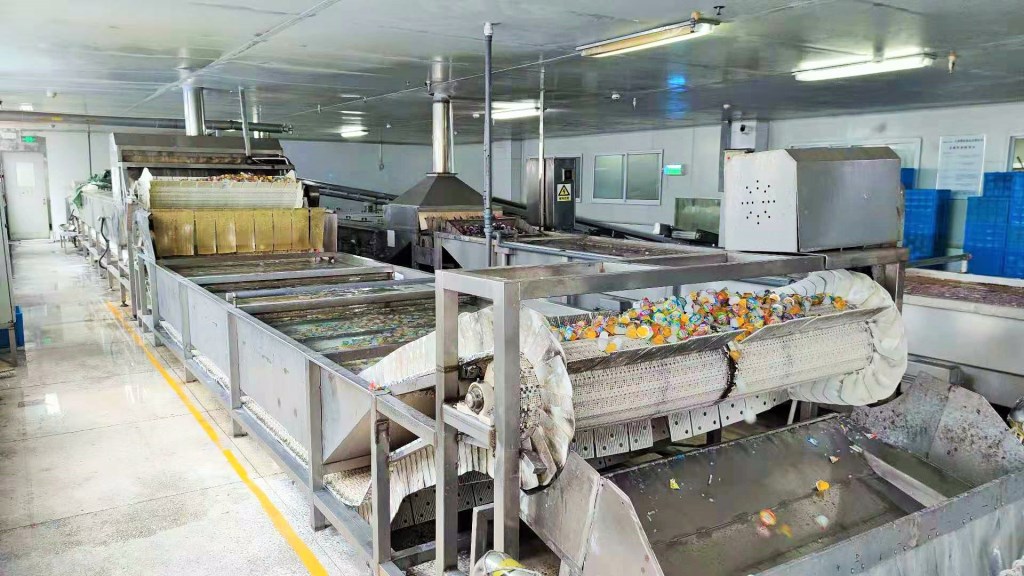
Establishing authoritativeness and trust (E-E-A-T) in functional food manufacturing requires verifiable production capabilities, strict quality control protocols, and transparent factory infrastructure. Located in Nantong, Jiangsu, China—a premier coastal food manufacturing corridor near Shanghai Port—Nantong Alinma Food Co., Ltd. stands as a benchmark custom manufacturer in the international confectionery landscape.
16,900㎡ Modern Production Headquarters in Nantong, Jiangsu
In-House Laboratory: BRIX, Micro, & Heavy Metal Analysis
Efficient Logistics Hub for Global Container Shipment
Intertek Assessment, Halal, & International Standards
Key Operational Strengths for Global Importers:
Verified Manufacturing Floor Space: Over 16,900 square meters of specialized food production workshops managed by 81 verified technical and operational personnel.
Third-Party Verification by Intertek: Production facilities, operational hygiene, and trading capacity independently inspected and audited on-site by Intertek.
Proven Export Track Record: Generating over US$10.5M in annual turnover, with US$9.5M attributed directly to global export markets across North America, Europe, Southeast Asia, and the Middle East.
Robust Supply Chain Integration: Supported by an established network of 194 cooperating raw material and secondary packaging manufacturing partners to guarantee unbroken supply during peak retail seasons.
Complete Customization Spectrum: Full end-to-end capabilities spanning sample-based matching, formula engineering, brand graphic design, custom mold fabrication, and ODM product development.
Comprehensive OEM Sample Center
Global Industry Trade Show Presence
Custom Packaging Solutions
International Buyer Inspection Visits
Trusted Supply Contracts Worldwide
5. Frequently Asked Questions (FAQ) for B2B Importers
Addressing the most crucial technical, regulatory, and commercial inquiries raised by international procurement managers:
What is the ideal collagen peptide molecular weight for stable jelly cup production?
We recommend low-molecular-weight collagen hydrolysates between 1,000 Da and 3,000 Da (Daltons). Hydrolyzed peptides in this range disperse uniformly without disrupting the hydrocolloid gel network (carrageenan/konjac) or affecting clarity, texture, and syringe gel strength.
How do you prevent collagen jelly cups from melting or thermal syneresis during tropical transit?
Nantong Alinma Food Co., Ltd. uses a proprietary non-gelatin hydrocolloid matrix combining high-grade Kappa-Carrageenan, Konjac Glucomannan, and Sodium Citrate. This synergistic gelling complex maintains structural integrity and elasticity up to 45°C (113°F), preventing water separation (syneresis) and shape loss in high-temperature ocean transit.
What active collagen dosage can be integrated into a single 15g to 32g jelly cup?
Depending on target flavor profiles and gel clarity, our standard production lines support dosages from 200mg up to 2,500mg of active collagen hydrolysate per cup without creating bitter protein off-tastes.
Yes. We supply 100% Halal-certified private label collagen jelly cups utilizing certified Fish/Marine Collagen or Bovine Collagen sourced from audited Halal suppliers, produced under strict cross-contamination-free cleanroom protocols.
What are the Minimum Order Quantities (MOQ) and lead times for private label packaging?
Standard OEM orders for private label collagen jelly cups start at 500 master cartons. Production lead times typically range from 20 to 25 days following sample approval and packaging graphic sign-off.
How can buyers request samples and place orders securely?
Importers can contact our export team directly at info@alinmafood.com to arrange physical sample kits. Orders can be seamlessly executed via Alibaba.com Trade Assurance for complete payment protection and freight monitoring.
Ready to Launch Your Private Label Collagen Jelly Line?
Connect with our technical R&D and export specialists at Nantong Alinma Food Co., Ltd. to receive customized formulation proposals, compliance documentation, and factory direct quotes.