Flagship OEM / ODM Fruit Jelly & Confectionery Line
Directly sourced from our Intertek-audited manufacturing complex in Jiangsu, China. High-margin retail solutions tailored for global distributors and brand owners.



Industrial Competence & Enterprise Infrastructure
Why Tier-1 global brand owners and retail giants partner with Nantong Alinma Food Co., Ltd. for turnkey confectionery manufacturing.
Intertek On-Site Verified
Our state-of-the-art facilities in Nantong, Jiangsu undergo rigorous third-party audits by Intertek. We uphold pristine hygiene standards, full HACCP compliance, and automated batch traceability.
End-to-End OEM/ODM Flexibility
From custom hydrocolloid formulation adjustments (Konjac, Carrageenan, Pectin) to bespoke 3D blister mold design, private label art printing, and promotional toy packaging integration.
Global Regulatory Compliance
Dedicated Halal-certified production lines, strict allergen isolation procedures, zero-trans-fat guarantees, and tailored nutrition labeling compliant with US FDA, EU, and Middle Eastern standards.
Custom OEM Fruit Jelly Sweets Manufacturing: Technical Framework & Market Architecture
The global confectionery landscape is undergoing a structural transition driven by shifting consumer preferences toward experiential snacking, clean-label formulation, functional wellness, and novel textural profiles. For institutional B2B buyers, sourcing from qualified Custom OEM Fruit Jelly Sweets Factories requires a deep technical understanding of hydrocolloid chemistry, thermal processing, shelf-life stabilization, and barrier packaging physics.
Fruit jelly sweets—ranging from traditional carrageenan-based mini-cups to complex multi-layered 3D peelable gummies and scoopable edible slime gels—represent one of the fastest-growing categories in retail snacking. Navigating contract manufacturing options demands careful evaluation of factory capabilities, raw material purity, and compliance frameworks.
1. Hydrocolloid Gelation Systems: The Science of Texture & Thermal Stability
The foundational characteristic of any fruit jelly sweet is its gelling matrix. Contract manufacturers utilize proprietary blends of hydrocolloids to achieve precise mouthfeel, elasticity, syneresis control, and melting behavior:
- Carrageenan (Kappa & Iota Synergy): Extracted from red seaweeds, carrageenan produces a firm, brittle, and crystal-clear gel. When blended with Konjac gum (glucomannan), it forms a highly elastic, cohesive structure resistant to moisture separation (syneresis), ideal for fruit cups subjected to tropical transit.
- Konjac Glucomannan: Renowned for its extreme water-binding capacity and chewiness. In OEM production, Konjac levels are precisely calibrated to meet safety and bite-force standards established by international food authorities.
- Pectin (High Methoxyl & Low Methoxyl): Citrus-derived pectin delivers a soft, natural fruit-jam bite with rapid flavor release. HM Pectin requires high soluble solids (Brix > 60%) and acidic pH, whereas LM Pectin allows for low-sugar and functional fruit jelly formulations.
- Gelatin (Bovine & Fish Origin): Offers a low melting point close to body temperature, providing a melt-in-mouth experience. Modern Halal OEM factories utilize certified bovine or fish gelatin to cater to global Muslim consumer bases.
2. Packaging Innovation: From Blister Thermoforming to Interactive Novelty Jars
Package integrity is as crucial as internal formulation. Leading fruit jelly factories deploy automated thermoforming lines capable of handling diverse rigid and flexible films (PET, PP, PE, and barrier aluminum laminates). Specialized packaging formats driving high consumer engagement include:
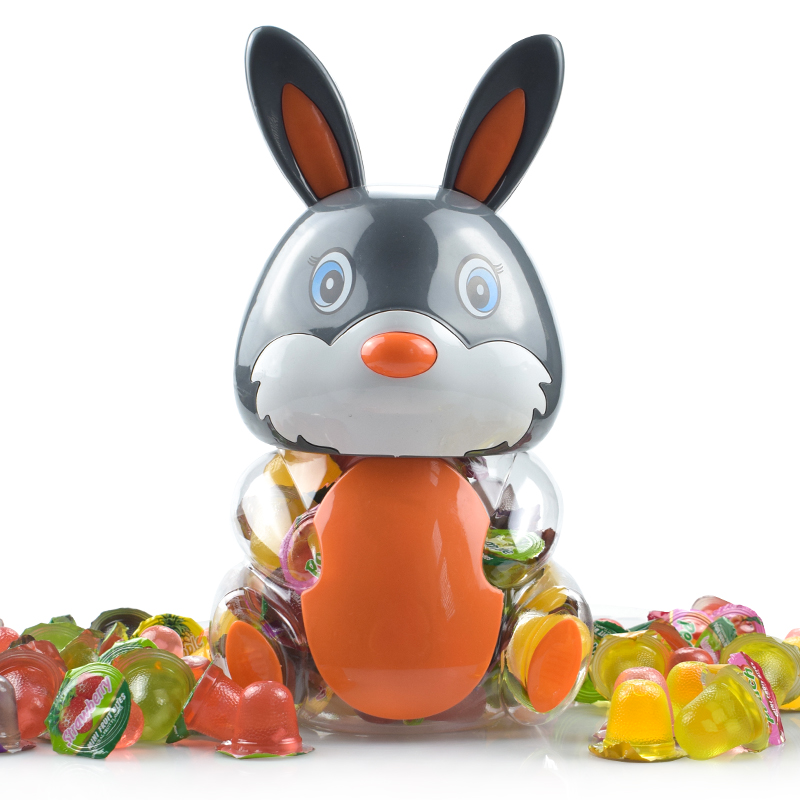
- Sports & Toy-Themed Injection Jars: Reusable PET jars molded into footballs, animals, or cartoon characters provide added value for kids' retail displays.
- Single-Serve Squeeze Pouches & Football Cups: Heat-sealed PP cups fitted with easy-peel foil lids designed to withstand retort pasteurization while ensuring zero leakage under pressure shifts during air or sea freight.
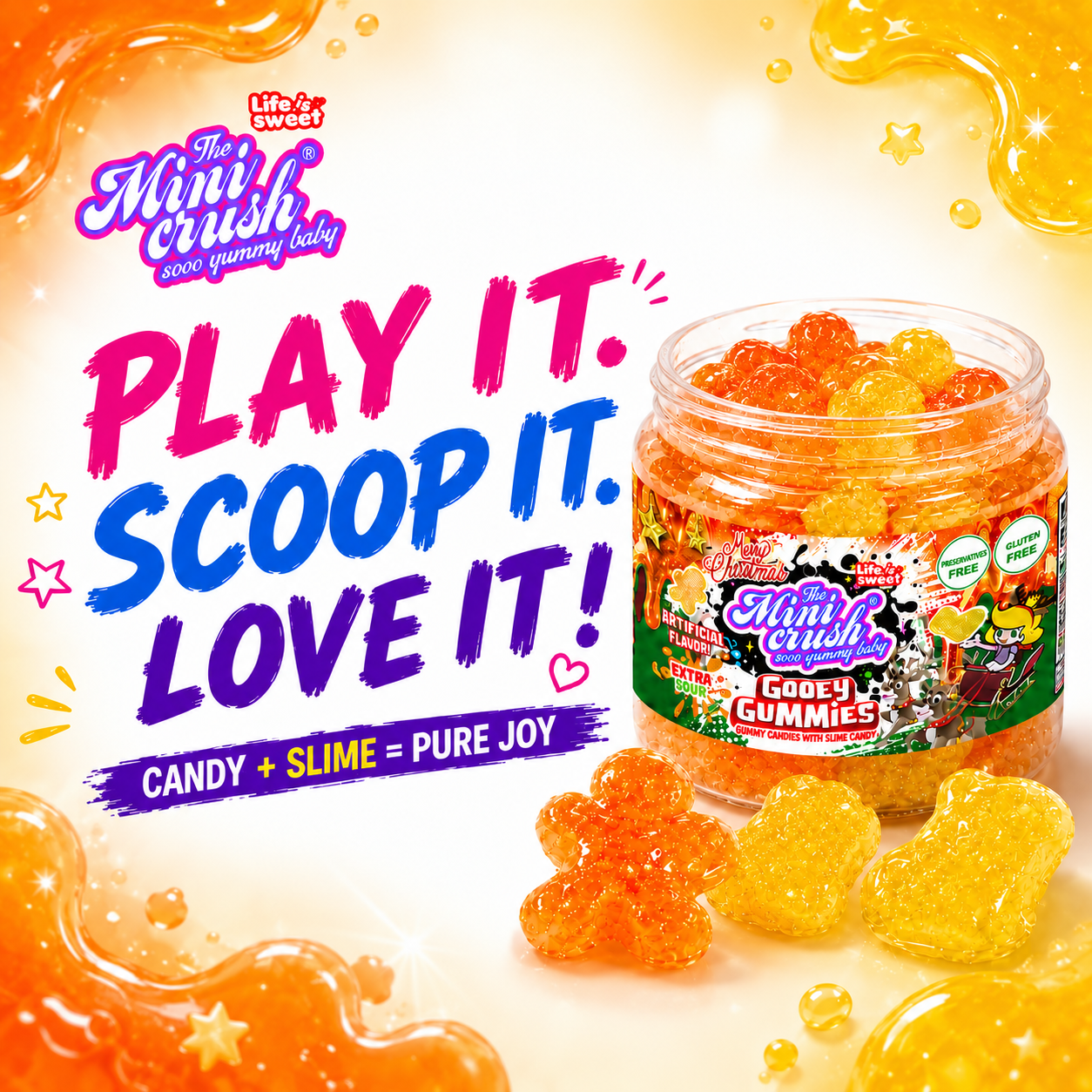
- Edible Slime Tubs & Scoopable Formats: High-viscosity liquid-gel matrices packed with interactive scoop utensils, creating social-media-friendly "snack entertainment."
Hydrocolloid Base Comparison for OEM Fruit Jelly Production
| Hydrocolloid Type | Textural Profile | Thermal Stability | Halal / Vegan Status | Best Application |
|---|---|---|---|---|
| Carrageenan + Konjac | Elastic, firm, chewy, high snap | Excellent (Up to 65°C) | 100% Vegan & Halal | Squeeze cups, novelty shapes, fruit puddings |
| High-Methoxyl Pectin | Soft, jam-like, rapid flavor release | Moderate (Up to 45°C) | 100% Vegan & Halal | Real fruit juice jellies, low-fat treats |
| Bovine Gelatin | Elastic, slow melt, soft bounce | Low (Melts > 35°C) | Halal (Certified Slaughter) | Traditional gummy shapes, liquid-filled cores |
| Agar-Agar Matrix | Brittle, short texture, dense gel | High (Up to 85°C) | 100% Vegan & Halal | High-temperature shipping, traditional slices |
Future Sourcing & Procurement Trends in Fruit Jelly Manufacturing (2025–2030)
Institutional buyers, brand strategists, and supply chain directors must align their product development roadmaps with upcoming industry disruptions. As fruit jelly manufacturing evolves, three dominant trends are defining procurement strategies worldwide:
Trend 1: Better-For-You (BFY) Reformulation & Functional Additives
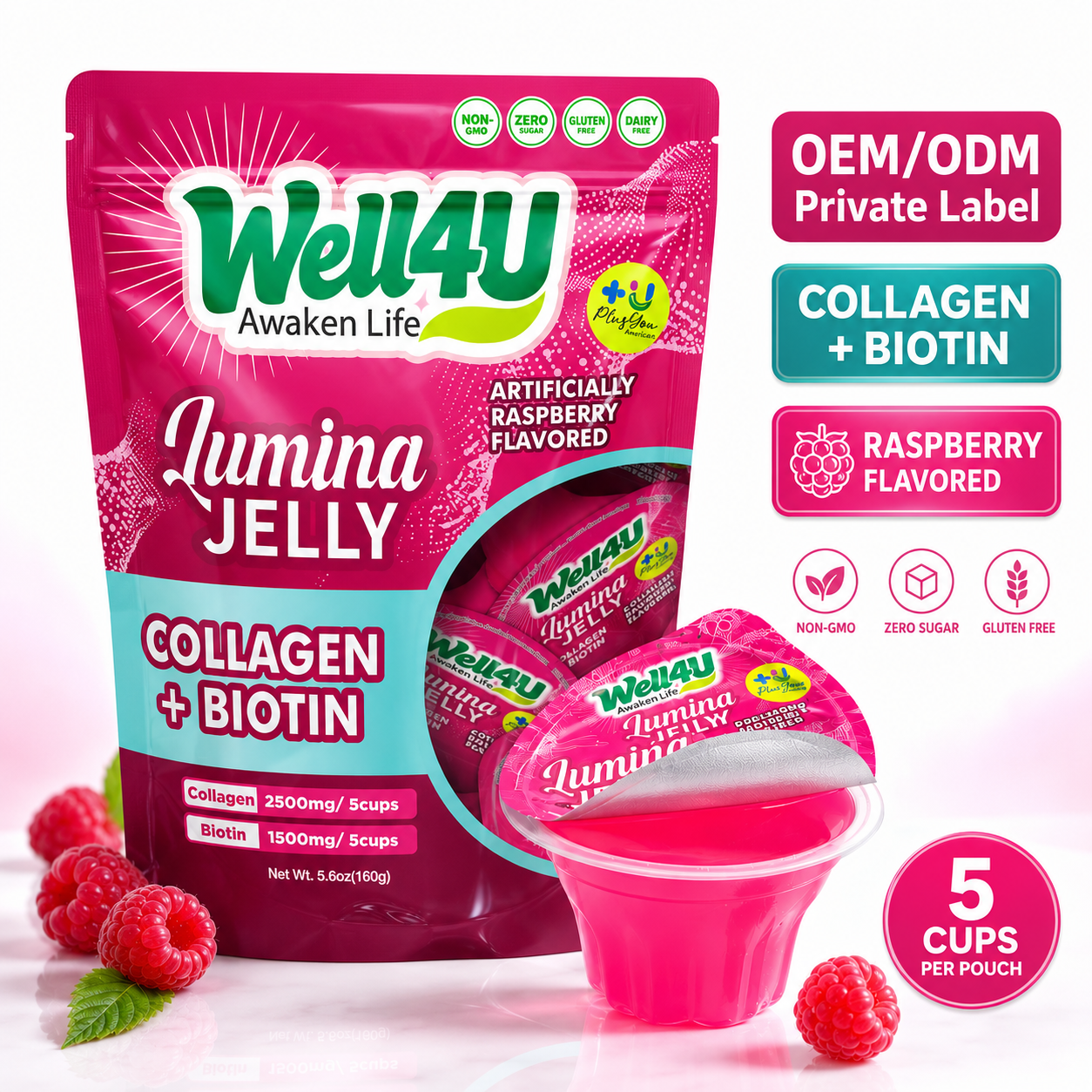
The global surge in health-conscious consumer behavior is reshaping the OEM candy industry. Traditional high-fructose corn syrup matrices are rapidly yielding to zero-sugar polyol replacements (Maltitol, Erythritol, Isomalt) and natural fruit juice concentrates. Furthermore, functional jelly cups fortified with hydrolyzed marine collagen, prebiotics (Inulin, FOS), Vitamin C, and Zinc are carving out premium wellness shelf space in convenience and pharmacy channels.
Trend 2: Interactive Snacking & Experiential Packaging
Gen Z and Gen Alpha consumers demand sensory engagement beyond simple flavor. Products like double-layer 3D peelable fruit gummies—which mimic the tactile act of peeling a banana or mango skin—and edible slime gels demonstrate unprecedented viral momentum across social media platforms. Contract factories equipped with multi-injection nozzle technology and dynamic co-extrusion lines hold a decisive competitive advantage.
Trend 3: Supply Chain De-Risking & Multi-Factory Sourcing Ecosystems
Geopolitical friction and freight volatility have highlighted the vulnerability of single-source procurement. Industry leaders are pivoting toward hybrid manufacturing models—exemplified by Nantong Alinma Food Co., Ltd.—which combine core factory production with an integrated network of 194 audited supply chain partners. This structure guarantees uninterrupted container throughput, flexible MOQ scaling, and cross-category consolidation.
Industry Development & Technological Breakthroughs
Modern fruit jelly production has evolved far beyond basic open-kettle boiling. Today’s high-capacity candy factories integrate automated ingredient dosing, continuous micro-cookers, vacuum flash evaporators, and sterile ultra-clean filling environments.
Precision Micro-Encapsulation for Reactive Ingredients
Integrating active ingredients (such as probiotics, fruit acids, or sensitive natural colors) into hot jelly syrup often leads to thermal degradation or unwanted flavor cross-reactions. Advanced OEM facilities utilize micro-encapsulation technology, protecting sensitive actives inside protective lipid or carbohydrate shells until consumption, preserving nutritional potency and vibrant taste profiles.
Aseptic Hot-Filling & Vacuum Nitrogen Flushing
To achieve extended shelf life (18 to 24 months) without artificial chemical preservatives, premium factories rely on continuous hot-fill pasteurization combined with automated inline leak detection and nitrogen headspace flushing. This prevents oxidative browning in light-sensitive fruit jellies and guarantees crisp microbial safety across long-distance ocean freight routes.
Standard Turnkey OEM / ODM Sourcing Process
How we transform your custom fruit jelly product concept into commercial container shipments in 5 structured stages.
1. Product Concept & Technical Brief
Establish target market regulations, sweetness/Brix levels, hydrocolloid preference (carrageenan vs. pectin), shape dimensions, target unit weight, packaging format, and Halal certification requirements.
2. Formulation R&D & Rapid Prototyping
Our food scientists cook custom trial batches in our R&D laboratory, dialing in flavor profile, color stability, and gel texture. Pre-production samples are dispatched via express courier for sensory approval.
3. Tooling, Blister Molds & Artwork Proofing
3D CAD design for custom jelly cups or character jars. Simultaneous print proofing for aluminum sealing foils, display boxes, master cartons, and FDA/EU nutrition facts panels.
4. Mass Automated Batch Manufacturing
Automated cooking, depositor filling, cooling tunnel setting, metal detection, inline weight checking, and retort sterilization under strict ISO22000 and HACCP quality controls.
Frequently Asked B2B Procurement Questions
Direct answers to crucial commercial, technical, and logistics inquiries from global candy buyers.
Is Nantong Alinma Food Co., Ltd. a direct factory or a trading supplier?
We are a verified Custom Manufacturer with integrated international trade capabilities. Our 16,900㎡ manufacturing premises in Nantong, Jiangsu were assessed on-site by Intertek. We operate our own production lines while orchestrating a vetted supply chain network of 194 specialized partner factories for complete category coverage.
What are the standard Minimum Order Quantities (MOQs) for OEM projects?
MOQs vary by product format: Standard fruit jelly cups and adult jelly shots typically start from 500 cartons; custom character toy jars start at 500 to 1,000 jars; 3D peelable gummies start at 12,000 retail bags; and freeze-dried candy lines start around 28,800 bags. Mixed-SKU consolidated container plans are available.
Can you supply 100% Halal-certified fruit jellies and gummies?
Yes, absolutely. A significant portion of our production lines is certified HALAL. We utilize plant-derived hydrocolloids (carrageenan, konjac, pectin) or strictly certified Halal bovine gelatin. Full official Halal certificates and ingredient specifications are provided prior to order confirmation.
How do you handle custom mold development and branding costs?
We offer low-cost rapid tooling for custom cup shapes and 3D blister molds. Minor packaging customizations (printing your logo on existing foil lids or display boxes) involve minimal setup fees, which are frequently credited back against high-volume commercial production orders.
What is the expected shelf life and transit stability of your jellies?
Our carrageenan-konjac fruit jellies feature an 18 to 24-month shelf life at ambient temperature. High thermal stability formulas are engineered to withstand ocean transit temperatures exceeding 45°C without melting, gel breakdown, or syneresis.
How are international payments and export orders protected?
We support Alibaba Trade Assurance, providing end-to-end payment protection, shipment coverage, and quality compliance guarantees. We accept T/T, L/C at sight, and offer flexible payment milestones for established contract clients.
Partner with China's Premier Fruit Jelly OEM Factory
Request custom recipe formulation, express sample kits, or immediate container quotation from our expert export engineering team.