Fruit Jelly can look simple in a sample cup: bright color, a clean fruit aroma, and a smooth spoonful. For global buyers, though, a good sample is only the beginning. The product must also match its specification, travel well, and remain consistent across production batches. A useful quality principle comes from W. Edwards Deming: “Quality is everyone’s responsibility.” His words are not specific to Fruit Jelly, but they fit every step, from ingredient selection to final inspection.
This guide explores seven practical buying tips. Buyers should compare fruit content, flavor, texture, sweetness, and ingredient declarations against clear product requirements. Ask suppliers for technical data, recent test results, shelf-life details, and samples from routine production—not just showcase batches. Check packaging dimensions and seal quality, too. A jar that looks sturdy on a desk may be less convincing after a long shipment.
Details matter. A lot.
Price deserves attention, but it cannot tell the whole story. Confirm production capacity, communication practices, traceability information, and the supplier’s ability to keep batches consistent. Requirements vary by destination, so buyers should verify applicable import and labeling rules with qualified local advisers. No checklist removes every uncertainty. Even experienced teams can miss a small mismatch between a sample and a written specification. These seven tips offer a practical starting point for asking sharper questions, documenting expectations, and choosing Fruit Jelly with fewer surprises.
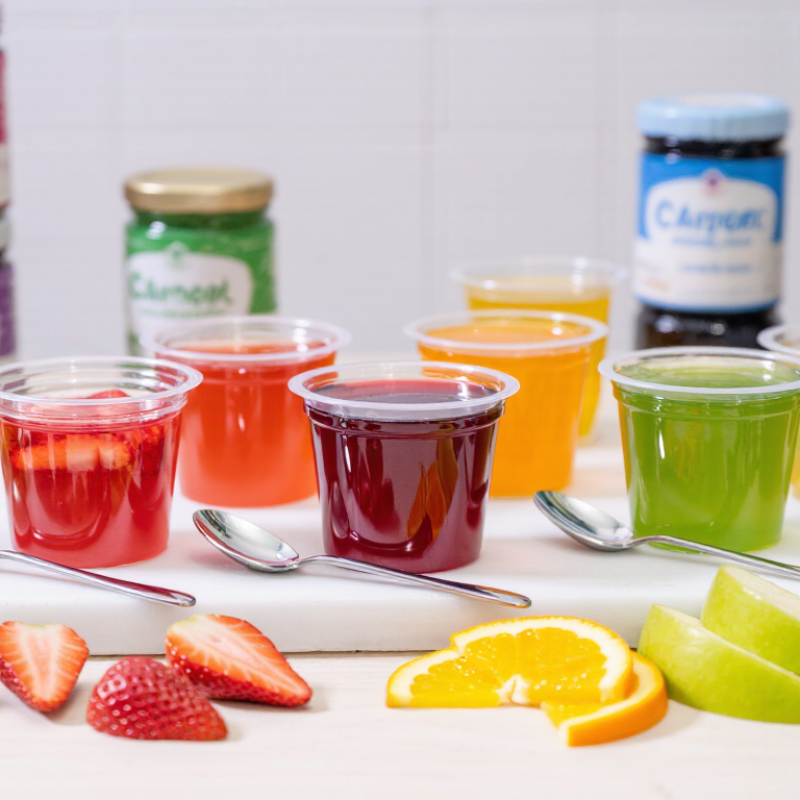
Fruit jelly is not one uniform product. Some styles use fruit juice for a clear, smooth bite; others contain pulp or small fruit pieces. Coconut gel inclusions add chew, but they can change the texture customers expect. Ask suppliers for ingredient details, fruit content, and sample batches before comparing prices. A label saying “fruit jelly” may not tell the whole story.
Format shapes both use and cost. Single-serve cups suit lunch boxes, cafés, and convenience counters, while resealable pouches can work for on-the-go snacking. Large tubs may fit dessert shops, but they need suitable storage and serving tools. Check cup size, seal strength, case dimensions, and shelf-life documentation. Small details matter.
Target the product to a real eating occasion. Children may prefer mild flavors and easy-open packs; adult buyers may look for tart fruit notes or visible pieces. Retail preferences differ, so test flavors and sweetness with local buyers rather than assuming one market’s tastes will transfer. I have seen packaging win attention, then lose repeat orders because the jelly felt too firm. That is easy to miss. Compare samples at serving temperature, and record texture, aroma, and portion feedback before placing a larger order.
7 Fruit Jelly Buying Tips for Global Buyers
When comparing fruit jelly, check the declared fruit content rather than relying on pictures of berries or citrus. A bright label can make a product look fruit-rich, but the percentage tells a clearer story. Compare similar package sizes and serving amounts. In many markets, ingredients appear in descending order by weight, so fruit listed near the beginning may be a useful clue. Still, labels do not tell the whole story. Fruit pieces, purée, and juice can create different flavors and textures.
Tips: Read the full ingredient list. Note added sugars, acidity regulators, and gelling agents, then compare products in the same category. Check whether the stated fruit percentage refers to the finished jelly or a fruit preparation. If that detail is unclear, ask the supplier for a specification sheet. A small question now can prevent a larger mismatch later.
Assess quality with your senses and the product data. The jelly should have a consistent color and set, with fruit pieces distributed evenly rather than gathered at the bottom. Look for clear batch coding, intact seals, and packaging that protects the product during transport. Ask for samples from more than one production batch when consistency matters. I would not judge quality from one spoonful alone; temperature and storage can change texture, and that is easy to overlook.
| No. | Buying Dimension | What to Check | Question for the Supplier | Buyer’s Action |
|---|---|---|---|---|
| 1 | Fruit content and form | Check the declared percentage of fruit and whether it comes from juice, purée, concentrate, or pieces. These forms contribute different texture and flavor, and concentrate is not the same as fresh fruit by weight. | How is fruit content calculated, and can the percentage be supported by a product specification? | Compare like with like; do not infer fruit percentage from color or flavor name. |
| 2 | Ingredient list | Review the complete ingredient statement for sweeteners, gelling agents, acidity regulators, flavors, colors, and preservatives. In many markets, ingredients are listed in descending order by weight, subject to local rules and exceptions. | Can you provide the current label and full ingredient specification for the target market? | Check every ingredient against the destination market’s labeling and permitted-additive requirements. |
| 3 | Sugar and nutrition | Compare total sugars and energy per 100 g, then review the serving size. “No added sugar” and similar claims have jurisdiction-specific definitions and do not necessarily mean sugar-free. | Are nutrition values based on laboratory analysis, calculation, or both? | Use the local nutrition-label format and verify claims before artwork approval. |
| 4 | Texture and gelling system | Identify the gelling agent, such as pectin, gelatin, agar, or carrageenan, and assess firmness, elasticity, syneresis (liquid release), and performance at the intended serving temperature. | Can you provide samples and the recommended storage and serving conditions? | Test samples after transport simulation and under realistic storage conditions. |
| 5 | Quality and food safety | Request a product specification, relevant test results, lot identification details, and information on the manufacturer’s food-safety controls. Requirements depend on product type and destination market. | Which tests are performed, how often, and what are the acceptance limits? | Agree on measurable specifications and review supporting documents before placing an order. |
| 6 | Packaging and shelf life | Check pack size, seal integrity, material suitability, storage instructions, date coding, and shelf-life conditions. Shelf life should be supported for the stated packaging and storage conditions. | What shelf life is validated, and what temperature and handling conditions are required? | Confirm packaging, coding, and remaining shelf-life requirements for the route to market. |
| 7 | Traceability and market fit | Review origin and lot-traceability information, allergen controls, language requirements, and any required declarations or import documentation. Rules vary by destination and product composition. | Can each lot be traced, and can documents be prepared for the destination market? | Verify local import, labeling, and documentation requirements before shipment. |
Fruit jelly can seem low-risk, but fruit preparation, water quality, and filling controls still matter. The World Health Organization’s 2015 estimates attribute about 600 million illnesses and 420,000 deaths each year to contaminated food worldwide. Ask suppliers for a current food safety certificate, then verify its number, site address, scope, and expiry date with the issuing body. A certificate for one factory may not cover the plant making your order. Check the audit scope carefully.
Look for a documented HACCP-based system and, where relevant, certification against ISO 22000 or a GFSI-recognized scheme. These indicate structured controls; they do not guarantee every batch is flawless. Request recent audit findings, corrective-action records, product specifications, and certificates of analysis for key parameters such as acidity and microbiological limits. Test the traceability system: can the supplier link a finished carton to its fruit and packaging lots? Ask for a mock recall record. Small details matter. I would also compare actual delivery performance with promised lead times, since strong paperwork cannot fix repeated delays. A polished PDF is reassuring, perhaps too reassuring; verify it independently.
When evaluating fruit jelly, inspect the package as carefully as the product. Cups should arrive with intact seals, clean rims, and no leakage. A sample carton can reveal more than a polished product photo. Check whether dividers prevent cups from rubbing together during transit. Small dents may seem harmless, but repeated damage can weaken seals.
Read the label against the product specification, not just the sales sheet. Confirm the fruit or flavor description, ingredient list, net weight, batch code, and best-before date. Allergen statements and storage instructions should be clear and consistent across the package. Keep it readable. If the print is tiny or the date code rubs off, ask for a revised sample. I once underestimated that detail; it was a poor shortcut.
Export rules vary by destination and product format. Ask the supplier for current label files and supporting documents, then have a qualified local importer or compliance professional check them against official requirements. Verify language, nutrition information, date format, and country-of-origin details before production. Also confirm that shipping cartons show handling and lot information where needed. Do not assume one label works everywhere. A small mismatch can hold up a shipment.
Check packaging, labeling, and export compliance before placing an order.
The 1–5 scores are illustrative planning priorities, not market statistics. Confirm destination-country requirements for ingredients, allergens, labels, packaging, shelf life, food-contact materials, and export documents.
A low unit price can hide expensive freight, oversized cartons, or high breakage risk. Compare the landed cost per sellable cup, including product, packaging, transport, insurance, and any temperature controls. Ask suppliers for a clear quotation with currency, minimum order quantity, and price validity date. Small differences matter. A sample may look affordable, but the full pallet tells a different story.
Shelf life needs more than a date printed on the cup. Request the product’s stated shelf life, storage range, and remaining shelf life at dispatch. Check how heat, humidity, and long transit times may affect texture, seals, and flavor. If possible, review batch records and test samples after realistic storage. Do not assume every shipment will travel under ideal conditions. That assumption is easy to make, and easy to regret.
Shipping requirements should match the product and destination. Confirm carton dimensions, pallet configuration, loading limits, and whether the jelly needs protection from heat or freezing. Check carrier schedules and allow time for customs processing and port delays. Check the carton. It should resist crushing and keep cups upright. Ask for photographs of packed goods before dispatch, especially for a first order. A buyer’s checklist can still miss details, so leave room to revise it after the first shipment.
Check whether it uses clear fruit juice, pulp, fruit pieces, or chewy coconut gel. Ask for ingredient details and sample batches. Texture can surprise you.
Single-serve cups work well for lunch boxes and cafés. Resealable pouches suit snacks on the go. Large tubs need proper storage and serving tools. Check seals and carton dimensions.
Test samples with local buyers at serving temperature. Record sweetness, aroma, texture, and portion feedback. Some may prefer tart fruit notes. I once focused too much on packaging.
Request a current food safety certificate and check its site, scope, and expiry date with the issuing body. Ask for audit findings and corrective-action records. A PDF is not enough.
It shows that the supplier uses documented food safety controls. Ask about traceability from finished cartons to fruit and packaging lots. Request a mock recall record. Paperwork is not perfection.
Check for intact seals, clean cup rims, and leaks. Look for dividers that stop cups rubbing together in transit. Small dents matter.
Compare the label with the product specification. Check the ingredient list, net weight, batch code, best-before date, allergen statements, and storage instructions. Make sure the print stays readable.
Request current label files and supporting documents. Have a qualified local professional check language, nutrition details, date format, and origin information. One label may not suit every destination.
Choosing Fruit Jelly for international markets requires more than comparing flavors. Buyers should first understand the available types, textures, pack sizes, and serving formats, then match them to the preferences and needs of their target customers. A careful review of fruit content, ingredient lists, texture, flavor consistency, and overall product quality can help distinguish products suited to different price points and uses.
Before placing an order, assess the supplier’s experience, quality-control processes, and relevant food safety certifications. Confirm that packaging is suitable for handling and transport, and that labels provide clear product details and meet the requirements of the intended market. Finally, compare pricing alongside shelf life, storage conditions, minimum order quantities, and shipping arrangements. Considering these factors together helps buyers make informed purchasing decisions and reduce the risk of delays, unexpected costs, or products that do not fit their market.