Choosing a Jelly Candy supplier is not just about finding bright colors and a sweet sample. Buyers need to assess whether a supplier can deliver consistent texture, reliable lead times, clear ingredient information, and packaging that protects each piece. The market context makes that decision important. Grand View Research’s Sugar Confectionery Market Size, Share & Trends Analysis Report estimated the global market at USD 58.8 billion in 2022 and projected a 4.7% compound annual growth rate from 2023 to 2030. A growing market can bring more supplier options, but it can also make quality differences harder to spot.
Look beyond a polished catalog. Request product specifications, recent batch records, allergen controls, and samples from more than one production run. Check whether the supplier explains shelf life, storage conditions, and how it handles changes in color or firmness. Small details matter. A jelly candy that arrives sticky or misshapen may create extra work for your team, even when the quoted price looks attractive. For additional sourcing context, ITC Trade Map offers trade data for sugar confectionery under HS code 1704; it can help buyers compare exporting markets, though it cannot verify an individual factory’s performance. This guide outlines practical questions for evaluating suppliers, from production capability to communication and quality assurance. No checklist replaces a factory assessment. And a good sample alone is not proof. I would treat every claim as something to verify, especially when a supplier is new or the order volume is large.
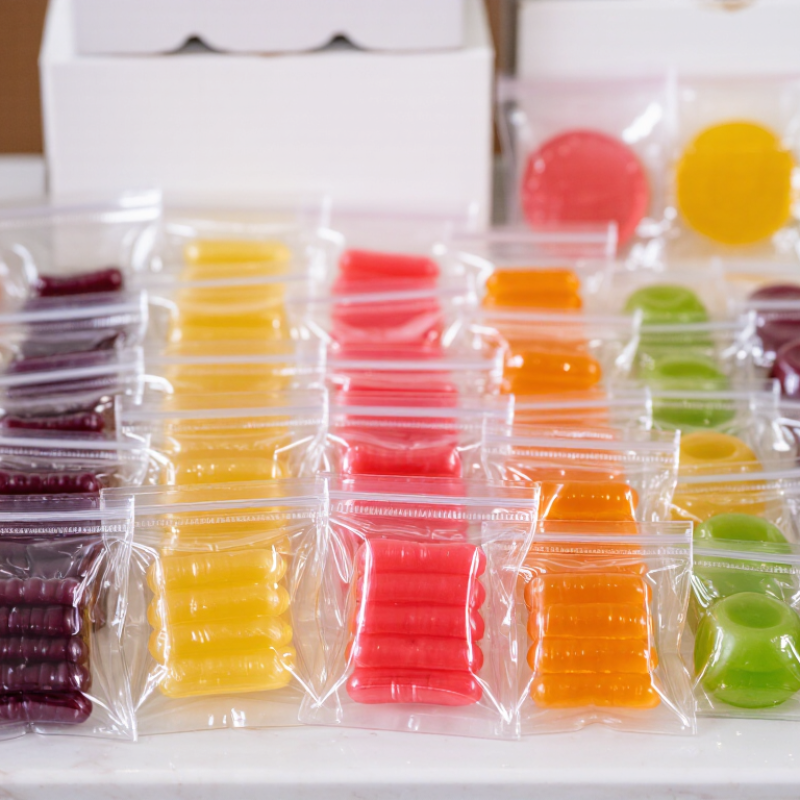
Before comparing suppliers, write a clear product brief. Specify the shape, piece size, texture, flavor, color, and whether the candy should be sugar-coated. A firm, fruit-shaped gummy needs a different texture target from a soft, sour jelly cube. Set measurable limits for weight and dimensions, too. Otherwise, “chewy” can mean something different to each supplier. It is easy to overlook packaging: decide whether you need individually wrapped pieces, resealable pouches, or bulk cartons, and state your expected order volume and delivery schedule.
Use consumer data to inform choices, not replace them. The National Confectioners Association’s 2024 State of Treating report says 98% of Americans enjoy chocolate, candy, gum, or mints. That broad appeal suggests room for varied formats, but it does not prove demand for a particular jelly texture or flavor. Ask potential suppliers for ingredient specifications, allergen controls, shelf-life evidence, and recent batch test results. Request samples made to your brief, then compare them after storage—not just fresh from the sample box.
Tips: Send suppliers the same specification sheet and score samples against it. Note details such as stickiness, chew time, and color consistency. Run a small production trial before committing to a large order. One caveat: written targets may still leave room for interpretation, so record what needs revision after tasting.
A jelly candy supplier should be judged by consistent quality and verifiable food safety controls, not attractive samples alone. Check whether product specifications define weight, dimensions, color, texture, and acceptable variation. A sample should feel pleasantly chewy, without hard spots or sticky patches, and its color should match the agreed specification. Appearance can mislead.
Ask how ingredients are approved, allergens are handled, and production batches are traced. Request current food safety certificates and audit information, then confirm their scope and expiry dates. A certificate is useful, but it does not replace clear answers about daily practices. Look for documented cleaning schedules, pest-control procedures, and checks that prevent allergen cross-contact.
Packaging matters, too. Inspect seals for damage, and check that labels match the ingredients and allergen information provided. Ask for test results relevant to the product, such as microbiological checks, and learn how the supplier handles a result outside specification. Review shelf-life data under realistic storage conditions; heat can soften jelly candies, while poor sealing may affect texture. I would not accept “we always do it this way” as evidence. It sounds reassuring, but it leaves questions unanswered. If records are incomplete, ask for clarification before placing a large order. A small trial run can reveal whether quality stays consistent beyond the first sample.
Suggested weighting for evaluating product quality and food safety
Food safety controls and consistent product quality receive the highest suggested weights. These percentages are a buyer’s scorecard framework, not regulatory thresholds or an industry-wide benchmark. Confirm applicable requirements and review current supplier records, audits, and test results.
A jelly candy supplier’s stated monthly capacity means little unless it matches your recipe, shape, and pack format. Ask how many depositing lines can run your specification, and request recent output records for comparable products. Check cooking, depositing, cooling, and drying capacity; a fast depositor cannot compensate for a crowded curing room. Ask for typical batch size, changeover time, and peak-season utilization. Ask for evidence. A production schedule with named backup equipment is more useful than a polished brochure.
Reliability needs numbers. Compare promised lead times with actual shipment records, on-time-in-full rates, and the spread between best and worst delivery weeks. The World Bank’s 2023 Logistics Performance Index assesses 139 economies across six dimensions, including tracking and timeliness; these offer useful context, not a guarantee for one factory. The National Confectioners Association’s 2024 State of Treating report placed U.S. confectionery sales at about $48 billion in 2023. That figure covers the wider category, not jelly candy alone, but it signals a busy market where seasonal demand can strain capacity. Ask what happens if a line stops or a key ingredient arrives late. Can the supplier show a tested recovery plan? I would still leave room for uncertainty: a forecast can look precise and miss a sudden order spike.
Comparing Pricing, Customization, and Communication
A useful supplier comparison starts with more than the price per kilogram. Check what each quote includes: sample fees, packaging, setup costs, minimum order quantities, and delivery estimates. A low unit price can look attractive, then shift once custom wrappers or small batches are added. Cheap can be costly. Ask for a written breakdown and compare like with like. For example, confirm whether quoted samples use the same texture, shape, and packaging materials as production orders.
Tips: Request samples in your intended flavors and colors. Record texture, sweetness, appearance, and any differences between batches. Also ask how changes to an order affect cost and timing. A neat spreadsheet helps, but it cannot predict every production issue.
Customization works best when specifications are concrete. Share target dimensions, color references, ingredient preferences, and packaging artwork requirements. Ask which options are already available and which need extra development time. Communication matters just as much. Notice whether replies answer your actual questions, give clear timelines, and flag limitations early. A fast response is not always a useful one. Before committing, agree on approval steps for samples and written production details. It is easy to overlook a small point, such as whether colors may vary slightly between batches, so leave room to clarify.
Before choosing a jelly candy supplier, verify documents against the actual production site. Ask for current food-safety certificates, audit summaries, facility registration details, and a named quality contact. Check expiry dates and confirm the certificate covers the products and processes you plan to buy. Paperwork can look tidy. It can still be incomplete.
Request recent batch records, ingredient specifications, allergen controls, and certificates of analysis. For jelly candy, compare moisture levels, texture, color, and declared ingredients across samples and production batches. The World Health Organization’s 2015 foodborne-disease estimates attribute 600 million illnesses and 420,000 deaths worldwide to contaminated food each year. That broad estimate is not candy-specific, but it underscores why traceability and preventive controls deserve careful review. Ask how quickly the supplier can trace a batch and identify affected ingredients. Then test the answer with a small order.
Finalize your choice using a written scorecard: product consistency, document quality, communication, lead times, and corrective-action history. Visit the facility if practical, or request a live video walkthrough of mixing, cooking, and packing areas. A polished sample is not proof of routine performance. I would also leave room for doubt: one audit cannot reveal every weak handoff, and my own first impressions can be wrong. Agree on sample approval, change notifications, and response times before scaling up.
Specify shape, piece size, texture, flavor, color, and sugar coating. Set weight and dimension limits. Chewy can mean different things.
Choose individually wrapped pieces, resealable pouches, or bulk cartons. Include your expected order volume and delivery schedule.
Send each supplier the same specification sheet. Check stickiness, chew time, color consistency, and flavor. Compare samples after storage, too. Fresh samples can mislead.
Ask about suitable depositing lines, batch sizes, changeover times, and curing capacity. Request recent records for comparable products. A fast depositor is not enough.
Compare promised lead times with actual shipment records and on-time delivery rates. Ask about backup equipment and plans for late ingredients. Forecasts can still miss sudden demand.
Check sample fees, packaging, setup costs, minimum quantities, and delivery estimates. Compare matching products and terms. Cheap can be costly.
Share target dimensions, color references, ingredient preferences, and packaging artwork requirements. Notice whether replies answer your questions and explain timelines. Fast replies are not always useful.
Set written sample approval steps and production details. Run a small production trial first. Clarify possible color variation between batches. I might still overlook a detail.
Choosing the best Jelly Candy supplier starts with clearly defining your needs, including product types, flavors, textures, packaging, order volumes, and delivery timelines. Once your requirements are set, compare suppliers’ product quality and food safety practices. Ask how they manage ingredient sourcing, production hygiene, quality checks, and documentation, and request samples when possible to see whether the candy meets your expectations.
Next, assess each supplier’s production capacity and ability to deliver consistently, especially during busy periods. Compare pricing alongside customization options, minimum order quantities, and the clarity and responsiveness of communication. Before making a decision, verify the supplier’s business credentials, review relevant records, and confirm that all agreed terms are documented. A careful evaluation of quality, reliability, service, and overall value can help you choose a Jelly Candy supplier that supports your needs over the long term.